Père Antoine Désiré Mégret (1797-1853)
A Town By Design
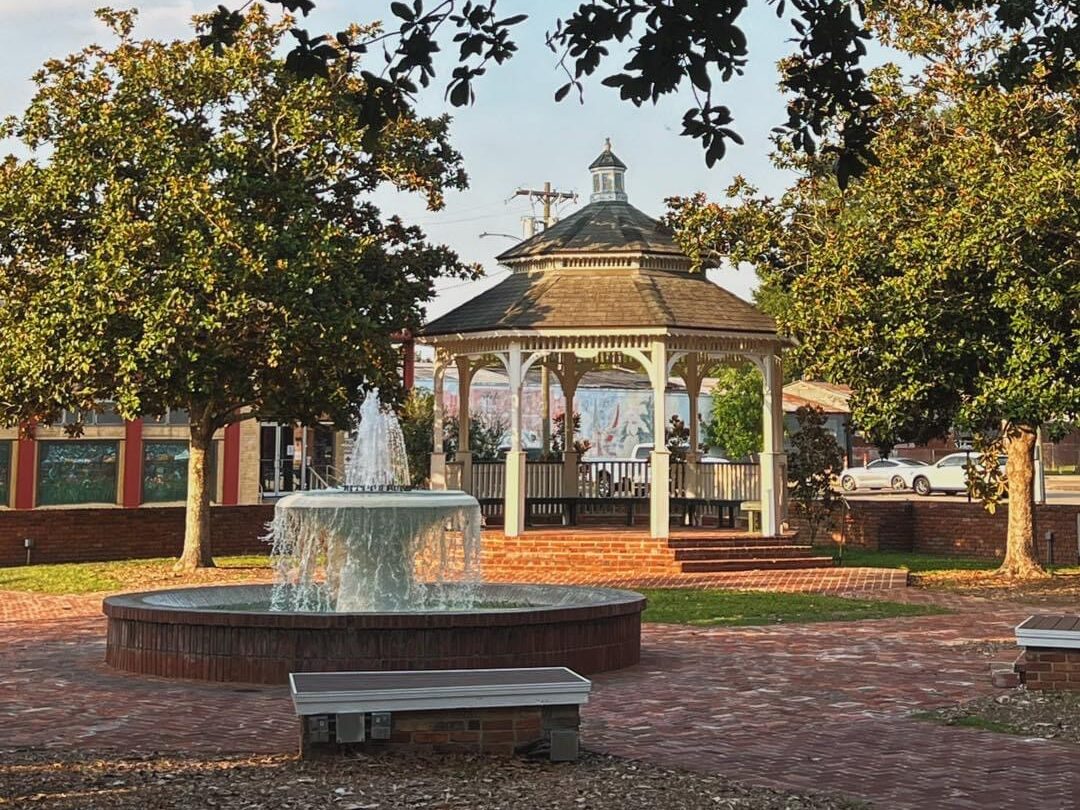
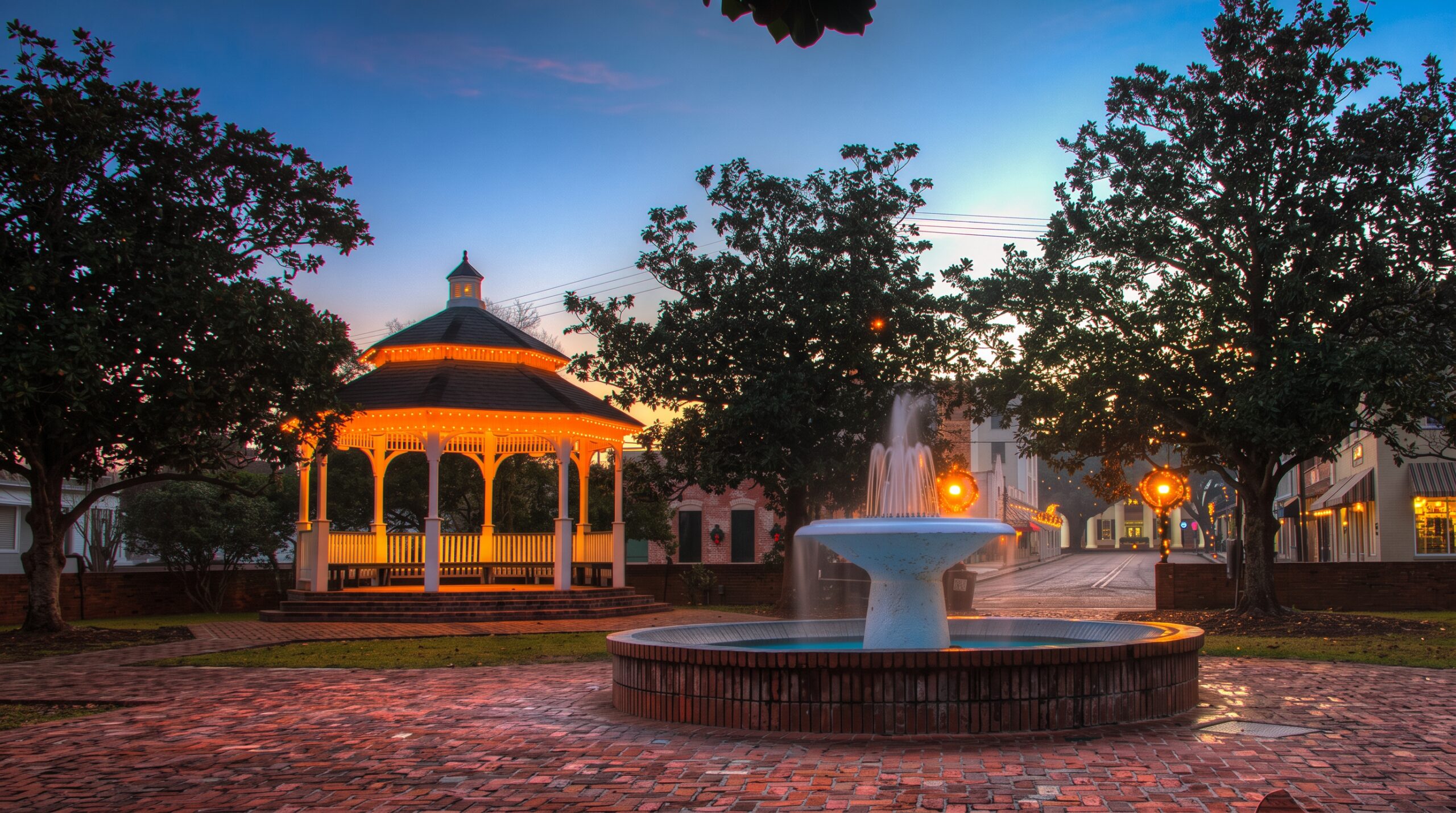
Father Mégret modeled his original plan for Abbeville after a French provincial village — and downtown still centers on a church, a square, a fountain, and a gazebo.
The land was bought in 1843, the town was incorporated in 1850, and the people who settled it were descendants of the Acadians who came down from Nova Scotia.
Photos Courtesy of the Vermilion Historical Society
1843
$900
38–40
1850
Our Story
La Chapelle, and a $900 purchase
The land that became Abbeville was formerly called La Chapelle. On July 25, 1843, Père Antoine Désiré Mégret — a Capuchin missionary — purchased it for $900 and named the town after his home in France, Abbéville.
Two people were living on the land at the time: Joseph LeBlanc and his wife, Isabelle Broussard. Father Mégret converted their former home into a chapel, which was dedicated as St. Mary Magdalen Church in 1844. The original chapel burned in 1854, and St. Mary Magdalen Catholic Church continues to stand at this historic location today.
A French provincial plan
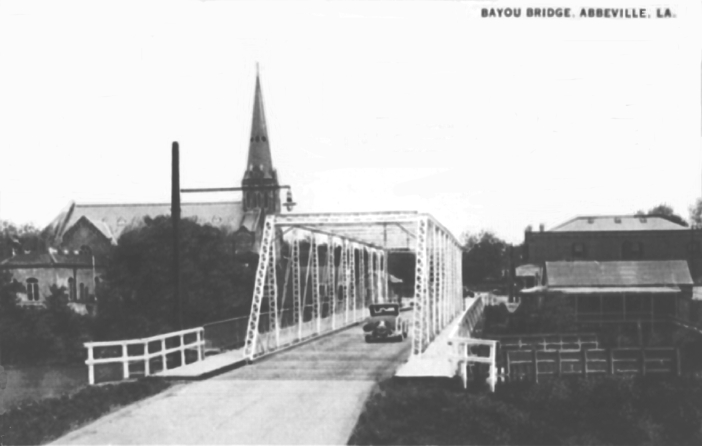
Father Mégret modeled his original plan for the village after a French provincial village. On a map he made in 1846, the town measured 38 to 40 acres — bounded on the north by St. Victor Boulevard, on the south by Lafayette Boulevard, on the east by “the Sisters of Charity,” and on the west by Bayou Vermilion.
The residents who settled the town were descendants of the Acadians from Nova Scotia, who moved to the area around 1766 to 1775. Abbeville was incorporated in 1850.
1766–1775
1797
Antoine Jacques Désiré Mégret is born May 23 at Abbeville dans la Somme.
1843
Father Mégret purchases the La Chapelle land on July 25 for $900.
1844
On February 12, the pastor gives his Louisiana town the name of his birthplace.
1846
1850
1854
The original chapel burns. St. Mary Magdalen Catholic Church stands at the site today.
1995
Fr. Jean Desobry finds Mégret’s dossier in the diocesan archives of Amiens.
Where the Name Comes From
Early on, the town was called “Abbville.” It is unclear exactly when or why the transition to “Abbeville” occurred. For many years, two theories existed about the origin of Abbeville’s name.
"Abbé's town"
Abbeville, Picardy
Named for Abbeville in the Picardy region of France, which some believed to have been the birthplace of Père Mégret.
Support for this theory could be found in the fact that the town in France is pronounced “Abbville” by its denizens.
1995
Magdalen Square
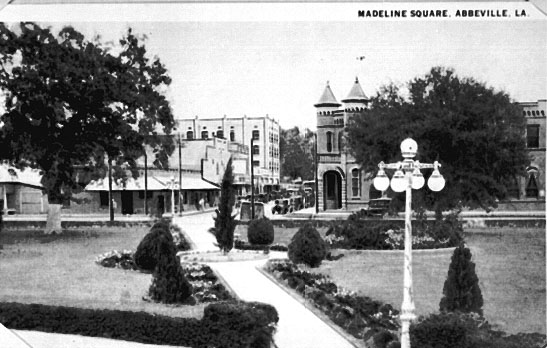
At the center of downtown is Magdalen Square, accented by large oak trees, a fountain, and a gazebo. A statue in memory of Father Mégret stands in the square.
Opposite Magdalen Square stands the Vermilion Parish Courthouse.
What to Do Here
Cajun Cooking
Murals & Landmarks
Murals across downtown, including Robert Dafford’s giant accordion on City Hall and Cajun Cowboys on the Tourist Center. Nearby: St. Mary Magdalen Church, the Steen’s Cane Syrup cans, and the Sam Guarino Blacksmith Shop Museum.
Downtown Storefronts
Places to Stay
Abbeville Main Street
Visitor's Guide
Stay Connected
Follow us on social media for the latest updates.